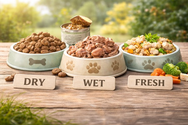
Wet vs Dry vs Fresh Dog Food
Simple, real-life pros and cons, without the lecture. Just enough to help you choose what works for you and your dog's routine, based on 20 years+ of dog boarding
If you’ve ever stood in the pet aisle thinking “why is there 900 types of dog food?” me too. The good news: you don’t need the “perfect” option. You need the right fit for your dog’s tummy, energy, and your day-to-day life because when they feel good, the whole house feels easier.
🍽️ What’s the difference, really? Moisture • Convenience • Cost
Most of the difference between wet, dry, and fresh comes down to water content (hydration), how easy it is to store, and how it fits your budget. The “best” choice is usually the one your dog enjoys and you can stick with consistently.
🥣 The quick pros & cons Pick what suits your dog
Dry (Kibble) Practical
- Easy to store, portion, and take on trips
- Cost-effective (especially multi-dog homes)
- Crunch can help with plaque for some dogs
Wet (Tins/Trays) Hydrating
- High moisture (helpful for hydration)
- Smell + texture often helps fussy eaters
- Softer for older dogs or dental issues
Fresh (Cooked/Raw) Premium
- Whole ingredients and strong palatability
- Can suit sensitive dogs (depends on recipe)
- Often feels “closer” to real-food feeding
🧩 Mixed feeding: the “best of both” option Very common
A lot of owners land on a mix, for example kibble as the base, then a spoon of wet or fresh on top. It’s a simple way to make meals more exciting without changing everything. (And yes, dogs absolutely notice when you add the “good bit”.)
✅ When mixed feeding helps
- Picky eaters
- Dogs who need more hydration
- Adding variety without full fresh costs
⚠️ What to watch
- Portion sizes creep up fast
- Sudden changes can upset tummies
- Keep treats in mind too

💷 Quick cost comparison Everyday budgets
Costs vary by brand and quality, but here’s a realistic guide for a medium dog (15–20kg).
| Food type | Estimated monthly cost | Cost level | Best for |
|---|---|---|---|
| Dry (kibble) | £25 – £45 | Low | Busy routines, consistent feeding, multi-dog homes |
| Wet (tins/trays) | £45 – £70 | Medium | Picky eaters, hydration support, softer meals |
| Fresh / prepared | £80 – £140 | High | Owners who want ingredient control + can plan storage |
| Mixed feeding | £40 – £80 | Medium | Balanced approach: practicality + taste |
✨ So what’s “best” for your dog? Simple checklist

The best food is the one that keeps your dog feeling good and fits real life. Use this as your “common sense” checklist:
- Energy: steady, not wired or sluggish
- Digestion: settled tummy and consistent poos
- Coat/skin: less itch, healthier shine
- Appetite: keen but not frantic
- Routine: you can keep it consistent